Trust evidence – checked 26 September 2026
FatPirate Trust and Reputation for UK Users
 Available in GB
Three different evidence categories matter for a UK reader. First, FatPirate’s current Terms do not list the United Kingdom among the excluded jurisdictions. Second, a check of the UK Gambling Commission public register did not verify a FatPirate or fatpirate.com licence entry. Third, recent public customer reviews include repeated complaints about withdrawal delays. Those points should be read separately, because access, licensing and customer experience are not interchangeable facts.
Great Britain requires remote gambling operators serving consumers there to hold a Gambling Commission licence. The absence of a verified FatPirate register hit therefore matters when assessing the regulatory position, but it does not by itself prove every allegation made in a review. Likewise, a visible website and a Terms page that does not exclude the UK do not establish UKGC protection.
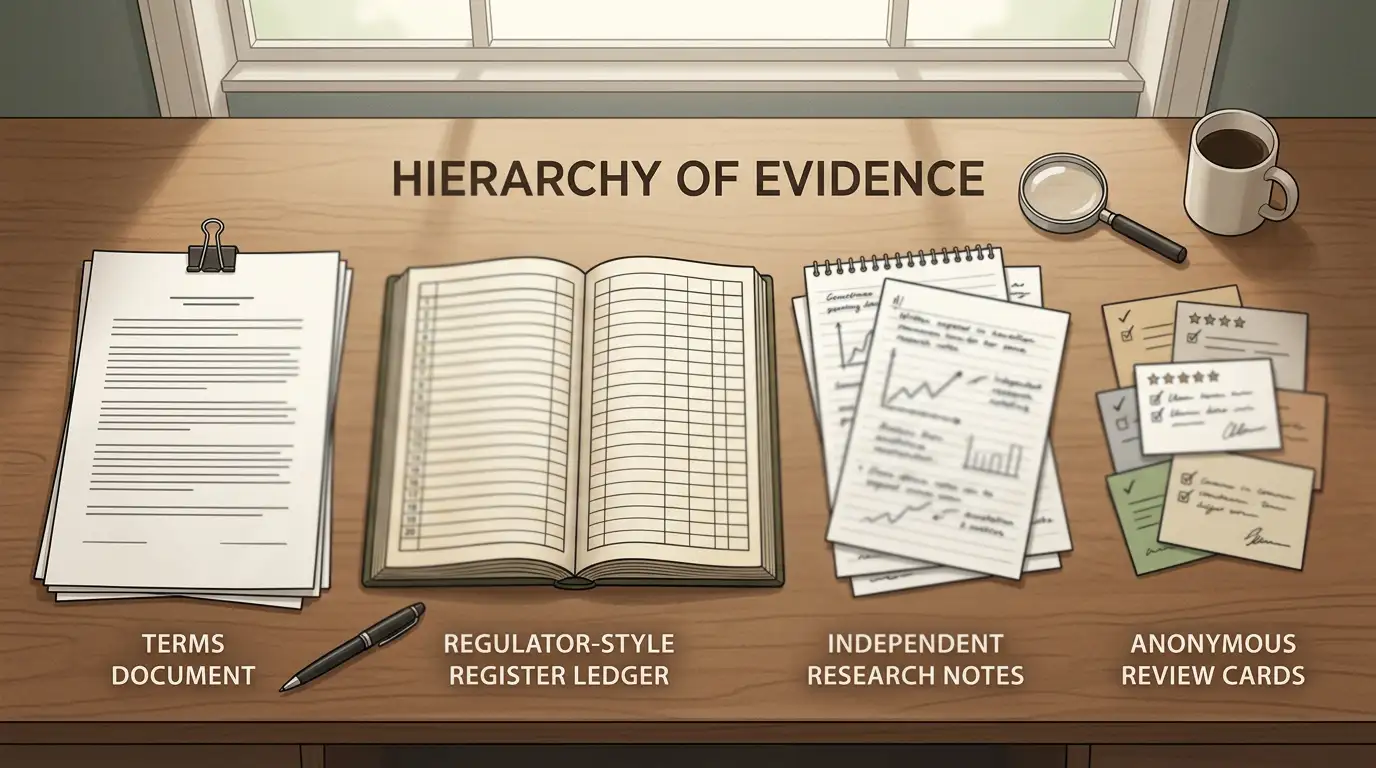
Evidence hierarchy
Table of Contents
- Start with what each source can actually prove
- The UKGC register is the key local regulatory check
- What FatPirate’s own Terms establish – and what they do not
- Why conflicting licence and company descriptions are excluded
- Self-exclusion at FatPirate is not the same claim as GAMSTOP coverage
- Recent reviews repeatedly focus on withdrawal delays
- Terms, KYC and support are useful trust signals but not substitutes for licensing
- Five checks to run before placing money at risk
- How UK users can verify FatPirate trust signals for themselves
Start with what each source can actually prove
A regulator register is the strongest source for a claim about a local licence. Official operator Terms are the strongest source for the operator’s own account rules and excluded-country list. Independent industry sources can help corroborate features or reveal disagreements. Customer reviews are useful for spotting recurring experience themes, but they are not adjudicated findings about what happened in every case.
| Evidence type | Best used for | What it cannot prove alone |
|---|---|---|
| UK Gambling Commission register | Whether a business, trading name or domain is recorded under a UKGC operating licence | How every customer transaction performs |
| FatPirate Terms | Account rules, excluded jurisdictions, KYC and withdrawal conditions published by FatPirate | A UKGC licence that is not present in the register |
| Independent industry sources | Cross-checking product features and identifying conflicting licence/operator descriptions | A definitive local licence status when the regulator register says otherwise or gives no hit |
| User reviews | Experience patterns and topics attracting repeated complaints or praise | That every allegation is correct or applies to every user |
This hierarchy prevents a common mistake: using a single positive or negative signal as a substitute for all the others. A casino can have a functioning website and a broad game catalogue while still presenting a regulatory question for a British user. Conversely, a negative review cannot by itself establish a licensing fact.
UK licensing
The UKGC register is the key local regulatory check
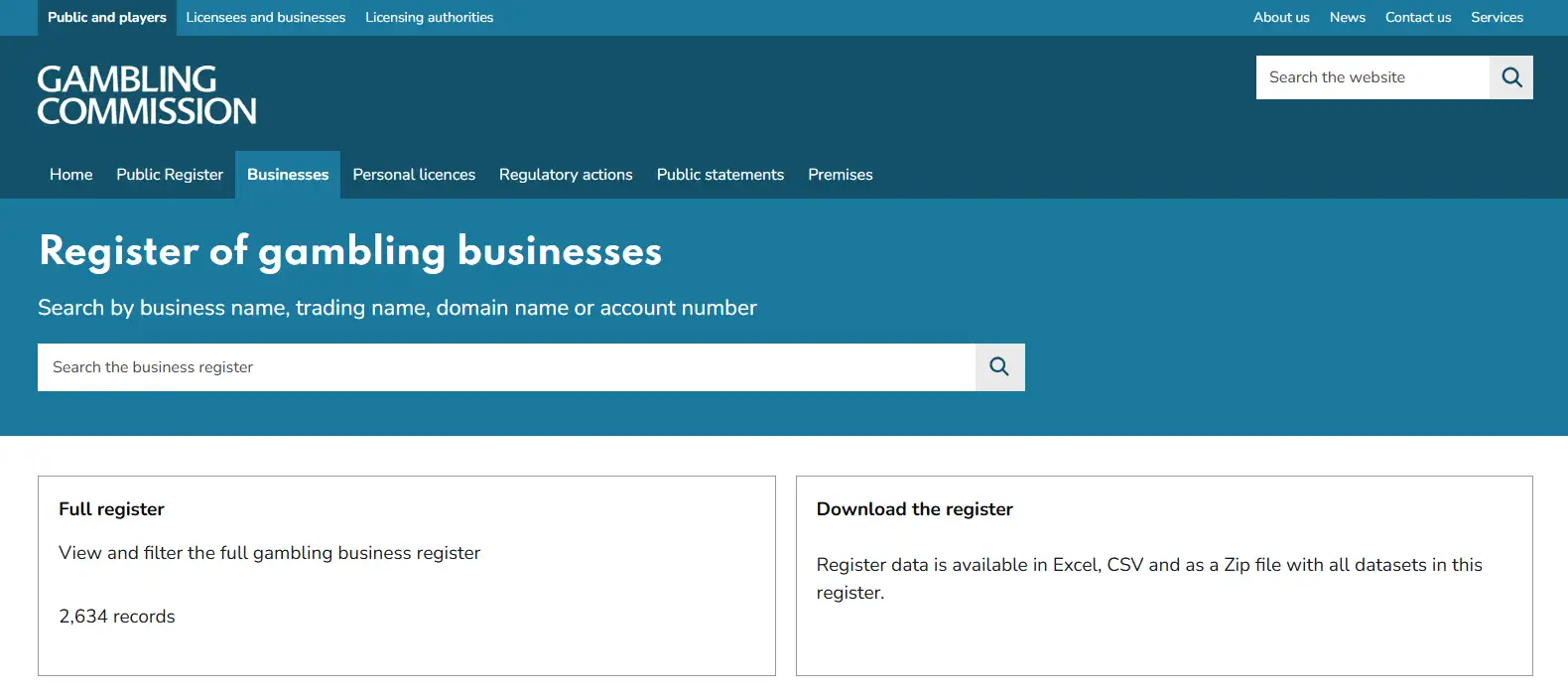
The Gambling Commission states that businesses providing remote gambling to consumers in Great Britain need a licence from the Commission, including businesses based overseas. Its public register can be searched by business name, trading name or domain. The register was updated on 24 September 2026 at the time of this check.
No UK Gambling Commission licence for FatPirate or fatpirate.com was verified in the register check used for this site. That is the relevant local-licence finding. It should not be rewritten as a claim that some named offshore authority definitely licenses FatPirate, because the sources reviewed contains conflicting descriptions of the operator and foreign licence identity.
It also should not be softened into an implication that general site access is equivalent to UK authorisation. UK regulatory protection depends on the operator being licensed for Great Britain, not merely on whether a website loads or whether the site’s own country list omits the UK. The detailed FatPirate UK licence check walks through that distinction and the register evidence directly.
For readers checking independently, the Gambling Commission recommends looking for the licensed company name and account number and verifying them against its public register. A footer badge or third-party review is not a substitute for that register check.
Terms and access
What FatPirate’s own Terms establish – and what they do not
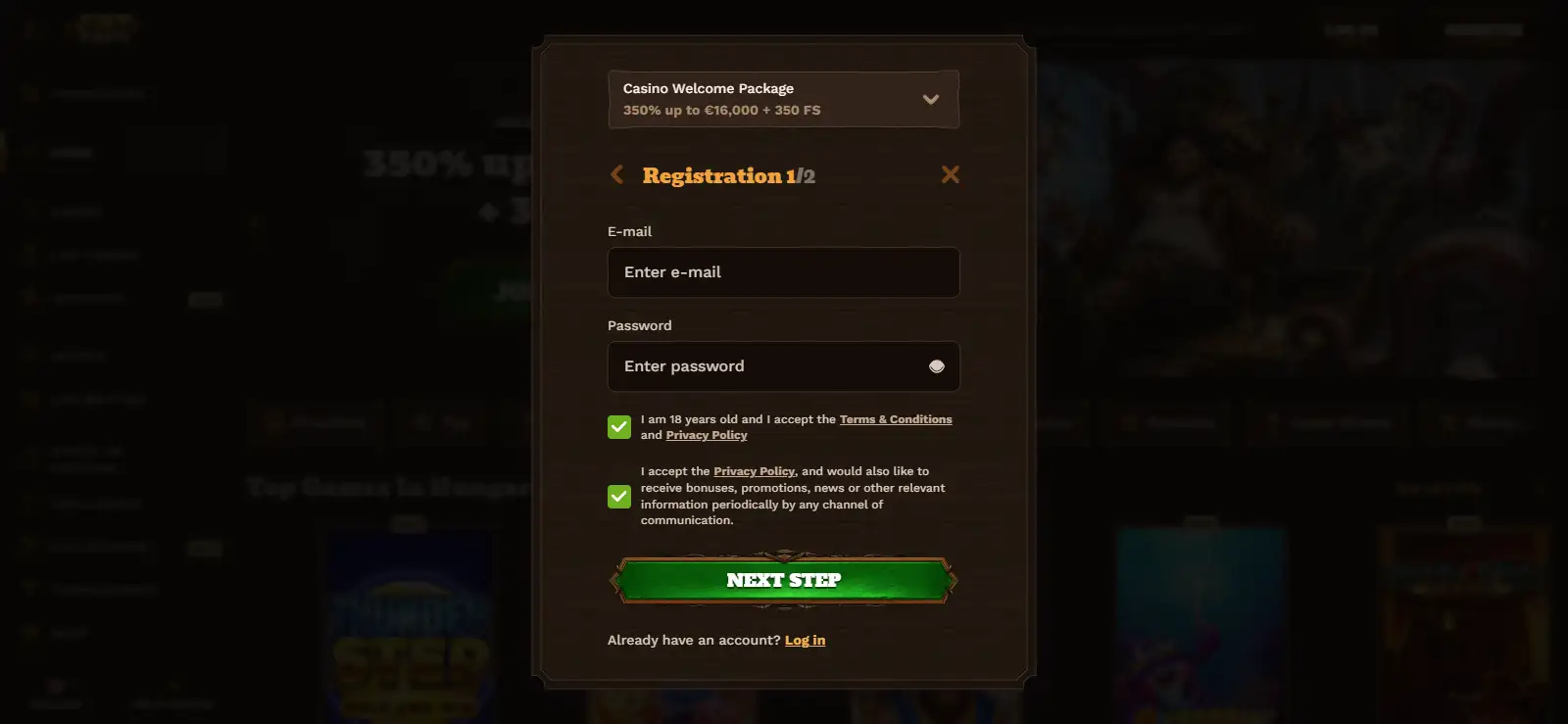
FatPirate’s General Terms v1.13, last updated 20 August 2026, list excluded jurisdictions. The United Kingdom is not in that visible list. The Terms also say users are responsible for knowing the laws that apply in their jurisdiction and reserve the operator’s ability to deny or close accounts.
That tells us something specific: the published general Terms do not contain a blanket UK exclusion. It does not tell us that FatPirate holds a UKGC licence, belongs to UK dispute-resolution arrangements or participates in every UK self-exclusion mechanism.
The same separation is important when reading the FatPirate account. An account can be subject to identity checks, closure rules and support processes under FatPirate’s Terms while the local regulatory question remains a separate matter.
Keep these claims separate
- UK absent from excluded-country list: operator Terms fact.
- UKGC licence not verified: regulator-register fact.
- Individual account acceptance: account-specific outcome.
- Withdrawal complaints: user-report pattern.
- Foreign licence/operator identity: conflicting in the sources reviewed.
Operator identity
Why conflicting licence and company descriptions are excluded
Several third-party sources attach different licence or operator descriptions to FatPirate. The official Terms page itself uses generic references such as “Company” rather than providing a clear legal-entity name in the visible text used for this research. Because those records do not align cleanly, selecting one foreign company or licence authority and presenting it as settled would create false certainty.
For trust analysis, this uncertainty is itself relevant, but it must be described accurately. The supported statement is that the sources reviewed do not verify a single consistent foreign licence identity or legal operator that can safely be published as fact. That is different from asserting that no foreign licence exists.
A reader who sees a licence name or company number elsewhere should therefore check the original regulator or company disclosure rather than relying on an affiliate badge. Exact licence numbers, expiry dates and regulator identities should be checked against the original register because one wrong identifier can point to an entirely different business.
Responsible gambling
Self-exclusion at FatPirate is not the same claim as GAMSTOP coverage
FatPirate’s current Terms provide a self-exclusion route through customer support email. That establishes an operator-level way to ask for account closure and self-exclusion. It does not establish that FatPirate is covered by GAMSTOP.
The Gambling Commission describes GAMSTOP as the national online self-exclusion scheme for online operators licensed in Great Britain. Because a FatPirate UKGC licence was not verified in the register check, this site does not claim GAMSTOP coverage for FatPirate. Treating those two systems as interchangeable would overstate what the evidence shows.
If your purpose is to stop gambling rather than assess the brand, use tools whose coverage you can verify independently and do not rely on a single operator account closure as your only barrier. An operator-specific self-exclusion request and a national multi-operator scheme solve different parts of the problem.
Customer reports
Recent reviews repeatedly focus on withdrawal delays
Recent public Trustpilot reviews include multiple GB-tagged complaints about pending or delayed withdrawals, including users describing waits beyond the site’s stated internal handling target. There are also positive reviews and reports of completed withdrawals, so the correct use of this evidence is to identify a pattern of concern rather than to declare that every withdrawal fails.
Review platforms contain individual accounts written by customers, not adjudicated case files. A reviewer can misunderstand a timeline, omit an account detail or describe a genuine problem that cannot be independently checked from outside the account. The useful signal is repetition: when many recent reviews concentrate on the same topic, that topic deserves closer attention before depositing.
For FatPirate, withdrawal timing is clearly such a topic in the current review surface. The separate FatPirate reviews looks more closely at the pattern, while the FatPirate withdrawals compares those reports with the operator’s published processing rules.
When reading reviews yourself, give more weight to dated, specific descriptions than to one-line accusations or praise. Look for whether the reviewer identifies the stage of the process – pending internally, verification requested, payment released, or bank receipt – because those are different events.
Published controls
Terms, KYC and support are useful trust signals but not substitutes for licensing
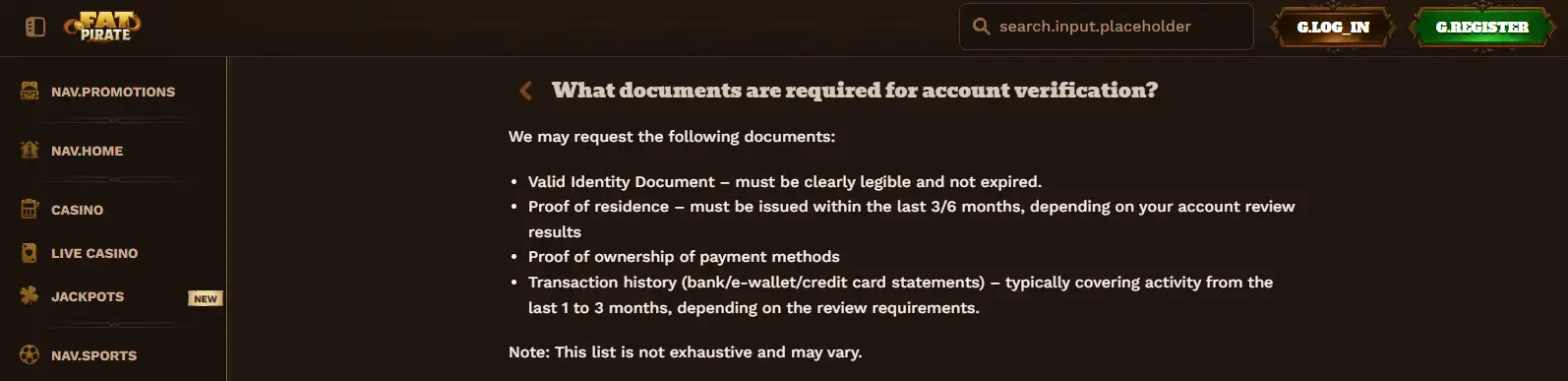
FatPirate publishes detailed account and verification terms. The current Terms describe age checks, identity and residence evidence, payment-method ownership checks, a document-response window and the possibility of further security checks. The site also publishes a support email and presents live support routes. Those are concrete operational controls a reader can inspect before creating an account.
They can improve transparency about how the account may be managed, but they answer a different question from regulatory authorisation. A detailed KYC section does not create UKGC status. Likewise, a support team answering a chat does not prove access to a UK ombudsman or compensation framework.
This is why trust should be evaluated as a set of evidence categories. Operational transparency can be present at the same time as local regulatory uncertainty. Keeping the categories separate makes the resulting decision more informed and less dependent on branding or a single review score.
Practical checks
Five checks to run before placing money at risk
- Search the UKGC register yourself. Use both the brand name and domain, and note the date of the register data.
- Read the current Terms. Confirm the country list, account rules, KYC clauses and withdrawal section rather than relying on an old review.
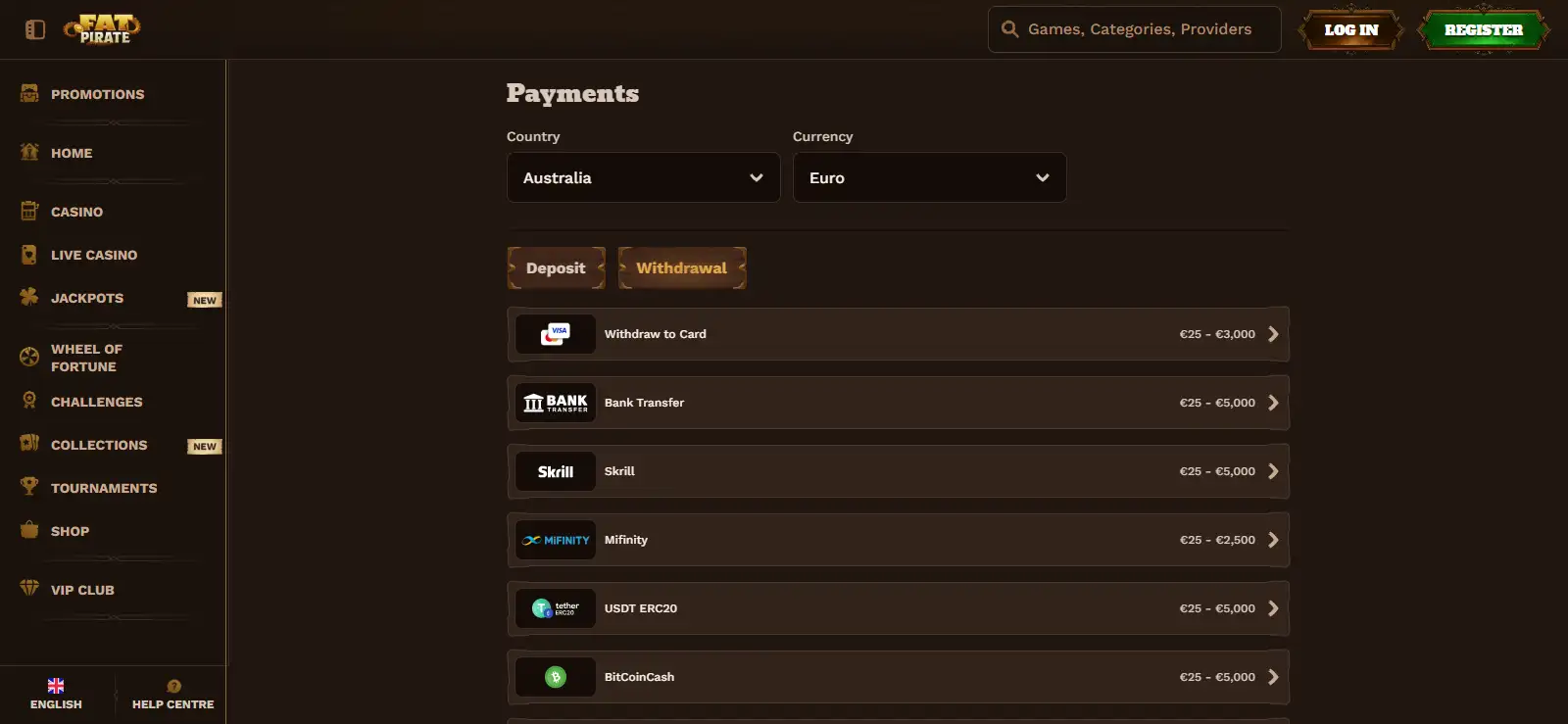
- Inspect the cashier before depositing. Payment availability and withdrawal routes can be account- or location-dependent.
- Read recent reviews by topic, not only by star score. Withdrawal timing, verification and support are more actionable themes than an aggregate rating.
- Keep records. Save deposit confirmations, support messages, verification submissions and withdrawal request timestamps if you choose to use the site.
These checks do not convert an uncertain regulatory picture into a guarantee. They simply give you a better evidence trail and reduce the chance of making a decision from an advert, a single affiliate page or an isolated review.
Decision framework
How UK users can verify FatPirate trust signals for themselves
Within the broader FatPirate casino review, the most important current UK-specific trust fact is the local register result: a FatPirate UKGC licence was not verified, while the Gambling Commission says remote operators serving consumers in Great Britain need its licence.
Use those facts for what they actually establish. Recheck the UKGC register, read the current Terms and inspect recent experience reports without treating any one source as a complete verdict. If a future source supplies a clear legal operator or licence claim, verify it at the named regulator before relying on it.
That evidence-first approach is more useful than a generic “safe” label because it lets you see exactly which part of the trust picture is documented, which part is user-reported and which part remains unresolved.
Published by the Fatpirate Casino team.